Keeping Your Scaffolds Safe in Unpredictable Weather
The UK weather is becoming increasingly unpredictable, stronger winds, heavier rain, sudden cold snaps, and fast-changing conditions now pose daily challenges for scaffolders. As we move into 2026, staying weather-ready isn’t just good practice; it’s essential for safety, compliance, and uninterrupted project delivery.
Evolving Weather Risks to Watch
Modern scaffolding teams are facing:
- Higher and more frequent wind gusts, especially on exposed or sheeted scaffolds
- Intense rainfall, softening ground and creating slipping hazards
- Storm cycles that require quicker, more regular inspections
- Rapid temperature shifts, affecting fittings, boards, and ground stability
This means inspections need to be more proactive, evidence-led, and responsive to daily forecasts.

The Big Three Hazards
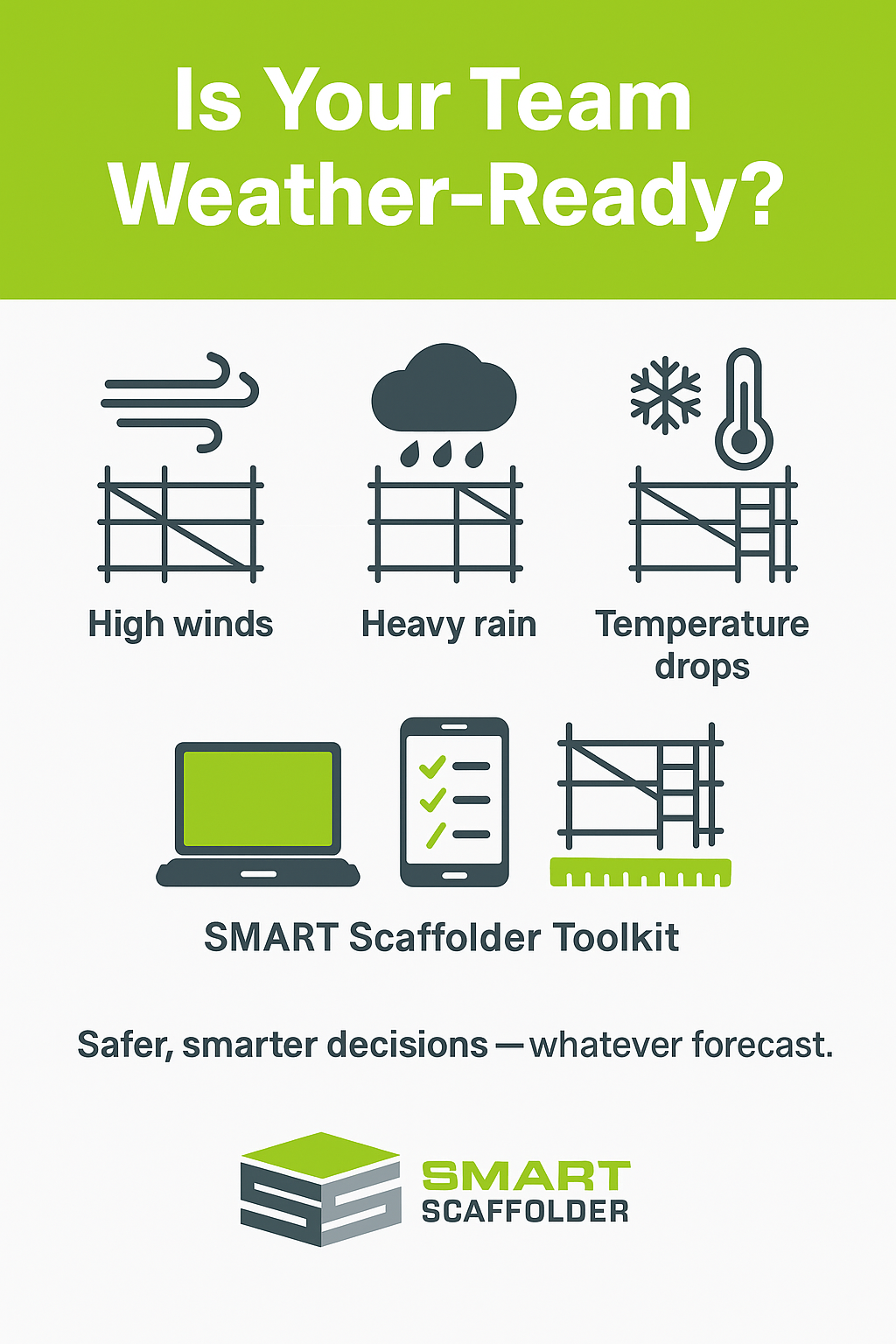
1. High Winds: Still the number one cause of scaffold incidents. Winds can loosen ties, dislodge sheeting, and compromise stability over time.
2. Heavy Rain: Persistent rainfall can weaken ground conditions, affect base plates, and increase slip risks.
3. Cold Snaps: Ice, snow and temperature swings can lead to board movement, frozen fittings, and instability underfoot.
A Quick Weather Safety Checklist
Use this before, during, and after adverse weather:
Before
- Check and record weather forecasts
- Inspect ties, bracing and sheeting
- Assess base plates, sole boards and ground conditions
- Secure loose materials
During
- Stop work if conditions exceed safe limits
- Keep exclusion zones clear
- Monitor weather changes on-site
After
- Complete a full post-weather inspection
- Look for movement, loose fittings or uplifted boards
- Reassess ground stability
- Capture and store photographic evidence
- Confirm scaffold is safe before re-opening access

A Note on Digital Documentation:
Clear, accurate inspection records are increasingly expected across projects, especially after storms or high winds. And as more companies adopt digital inspection tools such as SMART Forms, staying compliant during changing weather conditions becomes far simpler.
Final Thoughts: With the UK’s weather patterns continuing to shift, scaffold safety depends on preparation, regular checks, and clear documentation. A streamlined approach, backed by fast, reliable inspection processes, helps your team stay ahead of the elements and keep every scaffold safe year-round.
Start 2026 sharp, organised and ready, the SMART way.